
During the years of independence, the Republic of Tajikistan, under the wise leadership of the Founder of Peace and National Unity, Leader of the Nation, President of the Republic of Tajikistan, His Excellency Emomali Rahmon, has achieved remarkable political, economic, and social progress. At the same time, state policy has been based on the principles of humanism, justice, and respect for human rights and freedoms. One of the most prominent examples of such a humanitarian policy is the adoption of amnesty laws, which have consistently been welcomed and supported by society.
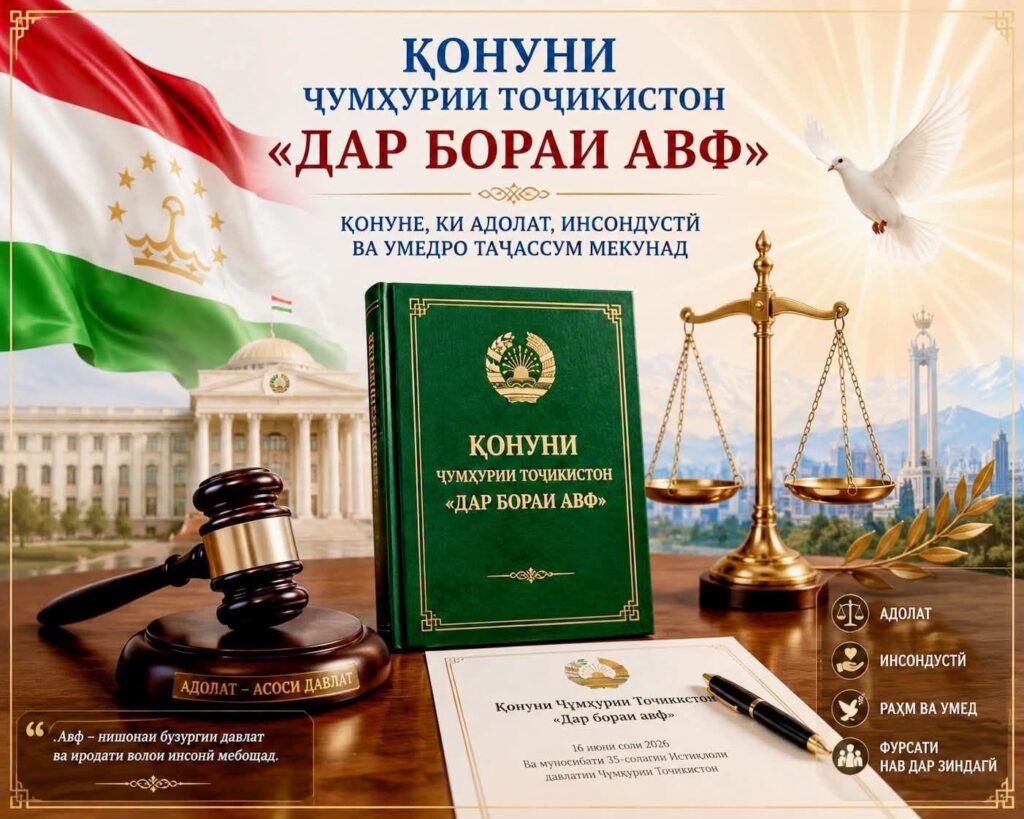
It is a source of pride that, on the occasion of the sacred and historic celebration of the nation—the 35th Anniversary of the State Independence of the Republic of Tajikistan—the Law of the Republic of Tajikistan “On Amnesty” was adopted. This important state initiative serves as another clear demonstration of the humane and caring policy of the state and the Government of the Republic of Tajikistan toward the fate and well-being of its citizens.
Amnesty, as an important legal and social institution, is not only the release of certain categories of citizens from criminal liability or punishment, but also a manifestation of mercy, justice, and confidence in the possibility of human rehabilitation. The essence of amnesty lies in providing individuals who have made mistakes and sincerely repented of their actions with an opportunity to return to a healthy, productive, and constructive life within society.
It is noteworthy that during the leadership of the Leader of the Nation, His Excellency Emomali Rahmon, amnesty laws have been adopted 18 times, benefiting tens of thousands of citizens. These humanitarian initiatives have not only changed the lives of thousands of people but have also contributed to strengthening mutual understanding, national unity, and social stability.
The positive effects of amnesty are significant and far-reaching. First and foremost, it contributes to preserving and strengthening families. The return of a released individual to the family environment plays an important role in raising children, caring for parents, and reinforcing family ties. At the same time, such individuals are given the opportunity to contribute to society and the prosperity of the nation through honest work.
Furthermore, the implementation of amnesty laws promotes a stronger sense of responsibility and self-awareness among citizens. Those who benefit from such measures gain a deeper understanding that the state trusts them and provides conditions for their rehabilitation. This factor, in turn, can help prevent repeat offenses.
Amnesty also serves as an important means of strengthening the principles of humanism within society. The culture of forgiveness, compassion, and support for those who seek to choose the right path in life is among the essential values of a civilized society. In this regard, the latest initiative of the Leader of the Nation, His Excellency Emomali Rahmon, dedicated to the 35th Anniversary of State Independence, is rightly regarded as a symbol of humanity and justice.
International experience demonstrates that developed countries also use amnesty as an important instrument of social policy. The Republic of Tajikistan has accumulated valuable experience in this field and, through the consistent implementation of humanitarian policies, continues to strengthen its reputation as a democratic, law-based, and social state.
Today, the people of the country welcome the humanitarian policy of the nation’s leadership with satisfaction, viewing it as evidence of the state’s care for its citizens. The Law of the Republic of Tajikistan “On Amnesty,” adopted in honor of the 35th Anniversary of State Independence, once again confirms that the individual, his or her rights, and dignity remain at the center of state policy.
In conclusion, amnesty is not merely a legal act but also a symbol of justice, humanity, and confidence in a better future. The adoption of the Law of the Republic of Tajikistan “On Amnesty” on the occasion of the 35th Anniversary of State Independence is a logical continuation of the people-centered policy pursued by the Leader of the Nation, His Excellency Emomali Rahmon. It will play an important role in strengthening social stability, national unity, preserving family values, and creating opportunities for a dignified life for citizens.
This noble initiative gives thousands of people renewed hope and confidence, guiding them toward a constructive life and active participation in the development of an independent Tajikistan.
Mavzuna Nazarova
Leading Specialist of the Department of Social Development and Public Relations,
Office of the Chairman of Buston City


